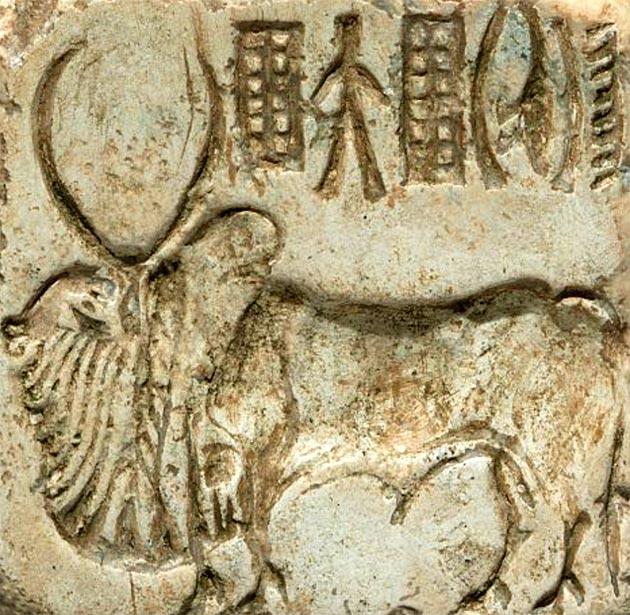
Zebu Seal
The majestic Zebu Bull, distinguished by its broad frame and powerful curving horns, is one of the most iconic motifs found on the seals of the Indus Valley Civilization. Predominantly discovered at the ancient cities of Mohenjo-daro and Harappa, the Zebu is believed to represent strength, leadership, authority, and prosperity.
In the context of the Indus Civilization, the Zebu Bull symbolized the protector and leader of the herd—an embodiment of courage, resilience, and vitality. Stone carvings depicting the Zebu are often associated with influential clans, powerful leaders, or high-ranking officials, reflecting its significance as a symbol of power and prestige.
Historical research also suggests a cultural connection between the Zebu Bull and the origins of Nandi worship. Among the numerous bull seals unearthed at Mohenjo-daro and Harappa, scholars believe the Zebu motif may represent one of the earliest depictions that later evolved into the revered symbolism of Nandi, the sacred bull of Lord Shiva.
In Hindu tradition, Nandi is the divine gatekeeper of Mount Kailasa, the abode of Lord Shiva, and serves as His loyal companion and mount (vahana). Revered as a symbol of unwavering devotion, strength, protection, and righteousness, Nandi continues to embody values that have endured across millennia.